



Rural civilization.
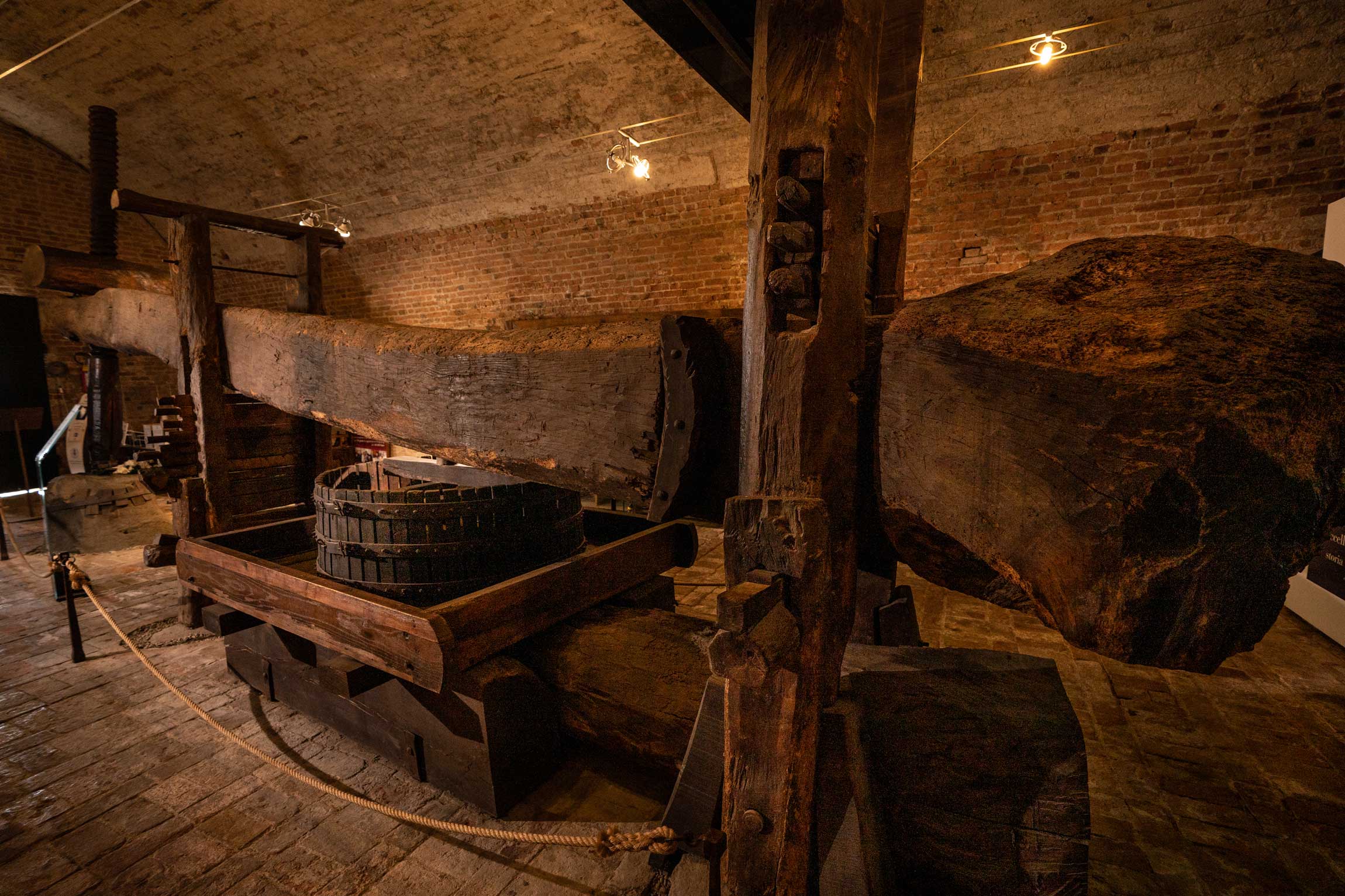
The hard work of many generations of farmers and craftsmen lies at the root of the fame of this extraordinary land. This section of the museum features original tools and equipment that were used for centuries in the fields and local workshops, providing a setting for the arts and crafts of the past.
Ancient arts and crafts.
The museum hosts an impressive number of utensils mainly associated with wine production and related activities, including items used on the farmyard, in the kitchen, in the cellar and which are typical of the arts and crafts of the past such as the workshop of a cooper or farrier, a distillery or a wagon weighbridge.
The reconstruction of a wine cellar will show you how grapes were once processed: from the ancient destemmer, used to separate the stalks from the berries before pressing, to the so-called brenta, a sort of wooden basket that you carried on your shoulders to pour the wine, from the bottling machine to the corking machine.
The workshop of a cooper, butalè in local dialect, will help you understand how barrels were made: by hammering, to get the staves into the rims still hot from the anvil. The making of a barrel is comparable to a work of art: it took years and years to learn the craft. It had to be flawless, with a clearly visible wood grain and without knots, beautiful to look at and as precious as the treasure it concealed.
Among other settings, you will also see the reconstruction of an 18th century distillery, with the copper stills used for distilling grappa, obtained from the long boiling of the marc after the precious juice has been pressed to make wine. Because, as peasant wisdom teaches us, nothing goes to waste.
Have you ever wondered how draught oxen were once shoed? In the reconstruction of the farrier’s workshop you will discover the ingenious system: the ox was secured to the huge harness preserved here, known as travaglio, and lifted off the ground to allow the farrier to do his work.
Time stands still in the old farmhouse.
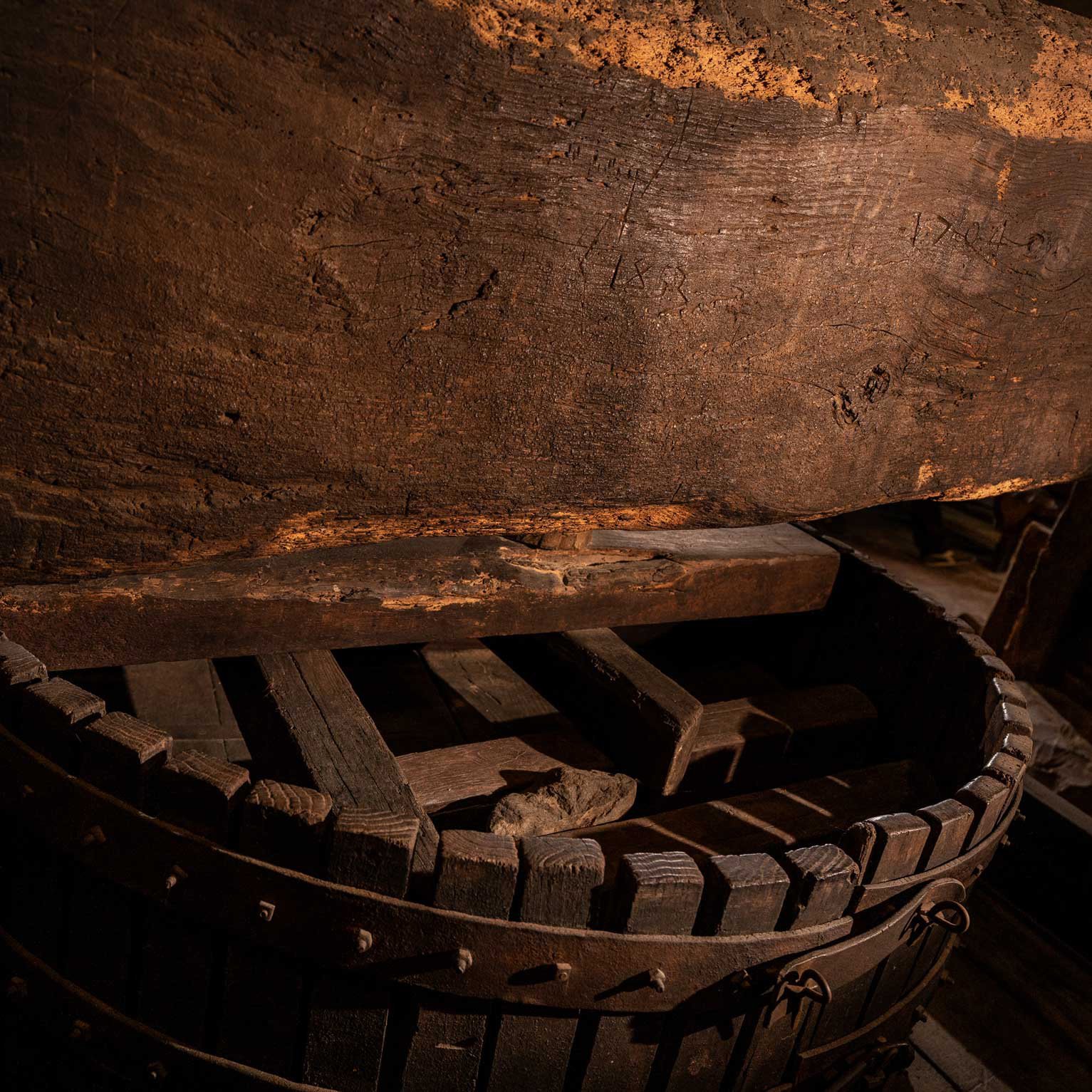
The reconstruction of the farmyard is truly amazing, with its countless courtyard “peasantries”, all useful before machines made their appearance. The exhibits include a wagon used to transport wine, with a barrel called carà and other tools, including the ribòt, a wooden roller used to crush grain in the threshing floor. There is also the “prete” (priest), which, however, has nothing to do with ecclesiastical circles: in fact, this was also the name of the rudimentary bedwarmer which used to hold the brazier that was placed under the blankets during the harsh Langa winters. It is interesting to note the enormous clogs made of straw, an insulating material, used for walking in the snow, forerunners of modern snowshoes.
